
The Wellbeing Power of Taking a Pause
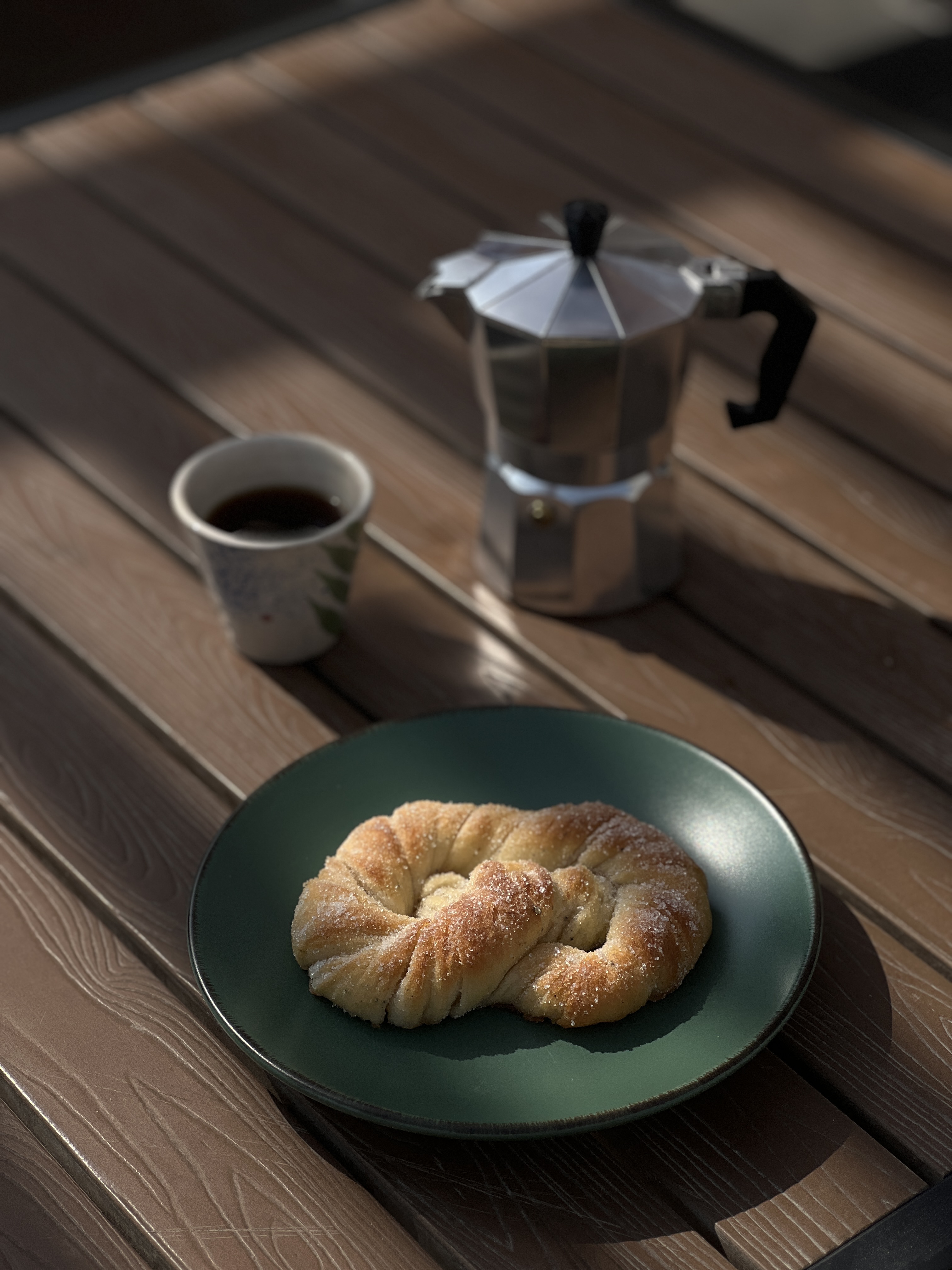
Wellbeing does not always need to mean a big lifestyle change. Sometimes it starts with a small, intentional pause. Inspired by Swedish Fika, this article explores how coffee, connection and a simple break can support daily rhythm, focus and social wellbeing in a busy city like Dubai.
Wellbeing does not always need to be complicated
In a city like Dubai, life can move quickly.
Work, traffic, school runs, meetings, business plans, family life, gym routines, deadlines and social commitments can all compete for attention. It is easy for the day to become one continuous rush.
When people talk about wellbeing, they often talk about big things: fitness plans, retreats, therapy, meditation apps, spa days, supplements, strict routines or major lifestyle changes.
Those things can have their place. But wellbeing can also start smaller.
A pause.
A real pause. Not scrolling. Not answering emails. Not eating while walking. A few intentional minutes with coffee, something baked and a chance to breathe.
This is where Swedish Fika offers a simple lesson.
Fika as a pause with structure
Fika is not a productivity hack, and it should not be reduced to one. It is a Swedish tradition built around pausing for coffee, something sweet and connection.
But because it is so simple, it gives people a structure they can repeat.
Instead of saying “I should take more breaks”, Fika gives the break a shape:
- Make coffee
- Put something fresh on the table
- Sit down
- Share it with someone, or enjoy it quietly
- Return to the day with more calm
That is powerful because habits are easier to repeat when they have form. Fika turns a vague wellbeing idea into a small ritual.
What breaks can do for the brain and body
A proper pause gives the brain a chance to reset.
Research on micro-breaks suggests that short breaks can help reduce fatigue and improve feelings of energy. A 2022 meta-analysis in PLOS ONE found that micro-breaks showed benefits for wellbeing outcomes such as vigor and fatigue, while performance benefits depended on the type of task and break.
Microsoft WorkLab’s brain research on meetings also found that breaks between meetings helped reduce the build-up of stress signals, while back-to-back meetings increased stress activity. In simple terms, the brain is not designed to move endlessly from one demand to the next without recovery.
The American Psychological Association has similarly highlighted that breaks can support mood, wellbeing and performance capacity.
This does not mean every break needs to be long. It means that the quality of the break matters. A short, intentional pause can be more restorative than ten minutes of half-working while checking messages.
A biological note, without overclaiming
It is important not to make exaggerated health claims. A Fika box is not medicine. A cinnamon bun is not a treatment for stress.
But the rhythm around Fika can support behaviours that are widely recognised as helpful:
- stepping away from continuous work
- reducing mental overload
- connecting with other people
- creating predictable moments of rest
- making space for enjoyment
- improving the tone of a workday or family routine
The biology behind this is not mysterious. Humans are not machines. Attention fatigues. Stress accumulates. Social connection matters. Food and drink can become cues for slowing down. Rituals can help the body and mind recognise that it is safe to pause.
That is the wellbeing power of Fika. Not perfection. Not transformation. A small repeatable pause.
The social wellbeing of pausing together
Fika is often shared, and that matters.
The CDC notes that high-quality social connection is linked with better health outcomes, and the WHO has described social connection as important for health, quality of life and communities. Again, Fika is not a clinical intervention. But it is a small cultural habit that creates space for connection.
In a family, Fika can become a moment where everyone sits down after a busy day.
In a workplace, it can become a few minutes where colleagues speak without a formal agenda.
In a community space, it can help people feel welcomed.
In a city of many nationalities, Fika can become a soft bridge between cultures because it is easy to understand: coffee, something sweet, a pause together.
Wellbeing for busy parents
For parents, wellbeing is often hard to schedule. There is always something to do. Schooling, meals, work, messages, errands and planning can fill the day.
Fika offers a realistic kind of pause.
It can be a small afternoon ritual with children. It can be a weekend tray with coffee and buns. It can be a moment where the family sits together without rushing to the next thing.
For Älskar Fika Dubai, this matters because the brand is family-led. It understands that people do not always need another complicated routine. Sometimes they need a warm, manageable moment that fits into real life.
Wellbeing for teams
For businesses, wellbeing can sometimes become abstract. There may be talks, programmes or benefits that sound good but are not always used.
Fika is more practical.
A regular Fika delivery gives a team something simple to gather around. It can be part of a Friday routine, a monthly team meeting, a morning coffee moment or a small staff appreciation gesture.
It is not a replacement for proper workplace wellbeing policies. But it can support the human side of work.
The CDC’s Workplace Health Model notes that workplace health programmes can support morale and workplace culture. A small ritual like office Fika sits inside that bigger idea: a practical, low-pressure way to create a better atmosphere.
The pause is the point
The most important thing about Fika is not the sugar, the coffee or the box.
It is the pause.
The bun gives people a reason to stop. The coffee gives the moment a rhythm. The box makes it easy. The tradition gives it meaning.
That is why Fika can feel surprisingly powerful even though it is simple.
In a busy city, a pause can be a luxury. But it can also be a habit.